Chicago bids goodbye to three decades of mayors controlling public schools
Did you know search engines like Google are changing the way you see news? Keep Chalkbeat’s valuable education coverage at the top of your feeds by clicking here and checking the box next to our name. On a late spring day in 1995, Mayor Richard M. Daley called his chief budget and finance director, Paul Vallas, into his City Hall office. Republican lawmakers, responding to a prolonged financial and governance crisis in Chicago Public Schools, were going to hand control of the district to the mayor. Daley told the 42-year-old Vallas, a hard-charging number-cruncher lacking management experience in public education, that he wanted him to be the district’s first CEO. “He didn’t really ask me,” Vallas said. “I was eager to do it.” Thus began three decades of mayoral governance that would take Chicago Public Schools from being labeled as the worst in the nation to a national leader of education reform to a district struggling with enrollment declines. It gave Chicago’s mayor authority to appoint everyone on the Chicago Board of Education, and effectively final say over major decisions that affected schools. After almost 32 years marked by better graduation rates, the expansion of privately run but publicly funded schools and programs, the largest mass school closures in U.S. history, two teacher strikes, financial struggles, increased state funding, and one mass board resignation, mayoral control of Chicago schools will end Jan. 15, 2027. That’s when a new board, fully elected by the people, will take control of the nation’s fourth largest school district after decades of advocacy for the change from community organizations and a push by the Chicago Teachers Union. People who held the reins of power under the four administrations that oversaw schools say mayoral control was an effective tool for making swift changes schools and students deserved. Other Chicagoans describe top-down decision-making that damaged trust, harmed school communities, and fueled the push for an elected board. Mayor Brandon Johnson, a former teacher and Chicago Teachers Union organizer who pushed to end mayoral control, welcomed the end of the era. In a statement, he likened mayoral control to something that cuts off oxygen, recalling budget cuts and closures “without any formalized democratic structure to organize.” “But we fought back,” his statement said. “Because of that fight, no one individual can ever again unilaterally shutter our schools, severing the ties that bind our schools and communities, and do so without being accountable to those very same communities.” Others who embraced mayoral control looked back proudly on the system. Arne Duncan — who was CEO under Daley for a seven-and-a-half year period that reshaped schools but also began the slow drumbeat for an elected board — said he’s concerned for student outcomes under a 21-person elected board with members beholden to competing interests. He’s also not convinced mayoral control is gone for good. “That was a phase, and we’re clearly in another phase now,” Duncan said. “The pendulum swings.” A system that meant alignment, top-down moves, fast firings Mayoral control of schools was a constant in Chicago for the last 30 years, but how it played out changed dramatically as political winds and education policy trends shifted. Initially, lawmakers gave the mayor power to appoint board members and the CEO. Daley used his newfound power to tap his chief of staff, Gary Chico, as the first board president. Four years later, the power to hire a CEO shifted to the board, but there was little distinction. The board voted to hire whomever the mayor recruited. Despite Daley staffing top leadership with trusted advisers in the system’s infant years, Vallas insisted the mayor didn’t micromanage him. Former Chicago Public Schools CEO Paul Vallas talks to supporters during his run for mayor in 2023. Vallas was the first CEO under mayoral control and oversaw massive and controversial reforms to the system. Vallas began to carry out Daley’s big goals: Avert a teachers strike after several in the 80s, fix the district’s budget, and improve student performance. Vallas kickstarted reforms that included placing low-performing schools on academic probation, leading to turnarounds that involved firing of hundreds of educators. The district also held far more students back a grade. Hundreds of school buildings were repaired while dozens of new ones were built. Teacher pay improved. The drastic changes resulted in only a slight improvement in test scores, one Northwestern study showed, and the mayor was reportedly frustrated over that. Chico stepped down in May 2001 and Vallas resigned a month later after what he described as “six great years.” “The one thing mayoral control did do was it forced the mayor to get more involved in the schools and play a role because the mayor used to kind of duck responsibility,” Vallas said. Duncan replaced Vallas in June 2001 and served through 2008, after which he became U.S. secretary of education under President Barack Obama, a fellow Chicagoan. Duncan was and remains the district’s longest running CEO. Duncan recalled “robust debates” with board members, refuting the belief that boards were mayoral rubber stamps. One time, he said he persuaded the board to shift money when times were tight to a summer bridge program, which gives students support transitioning to a new school or grade, in response to new research on dropout prevention. “That wasn’t easy,” Duncan said. “They questioned, they challenged, we thought it through and they ultimately supported it.” In 2011, Rahm Emanuel succeeded Daley as mayor. A Democratic power broker who was a former congressman and adviser to Presidents Bill Clinton and Obama, Emanuel continued a reform-heavy approach to the school district. His era of mayoral control featured the continued expansion of privately run school programs, the rollout of universal pre-K, the closure of 50 schools in largely Black and Latino neighborhoods, financial crises, a reformed state education funding formula that infused hundreds of millions of dollars in new money into CPS, and a revolving door of CEOs. Beth Swanson, Emanuel’s deputy for education in the mayor’s office, said the administration consulted community organizations and other constituents before making decisions, contrary to some public belief. Still, boards voted in line with what their mayor wanted, and breaking with City Hall could have consequences. Under Mayor Lori Lightfoot, Emanuel’s successor, board member Dwayne Truss was replaced after he opposed a plan for building a new, $120 million high school in Chinatown. Lightfoot’s team said Truss’s term had simply expired, but Truss claimed he’d been asked to stay for another term before his public opposition to that plan. Johnson took the reins in 2023, fulfilling the teachers union’s longtime goal of installing one of their own in the mayor’s office. But it came at an awkward time. The clock was ticking — halfway through Johnson’s term, the board would become partly appointed and partly elected. Early on Johnson’s watch, the district moved away from funding schools based on student enrollment, removed school-based police officers, approved paid parental leave for teachers, and rethought selective schools admissions before backing off. Mayor Brandon Johnson (far right) ring bells with students at Chalmers Elementary School on the first day of the 2024-2025 school year with then-CEO Pedro Martinez. Johnson would be the city's last mayor with control over CPS. Then a rift opened between Johnson and his all-appointed board over a Johnson ultimatum: agree to take out a high-interest short-term loan to help pay for hefty pension and union contract costs or fire then-CEO Pedro Martinez. All seven members resigned. Johnson appointed new members, most of whom stayed on a few months later when 10 newly elected members joined. It was the beginning of the end of mayoral control. Mayoral control by nature meant that the proverbial buck stopped with one person, and they could be voted out. Supporters argued that the system also aligned City Hall with CPS so that they could more efficiently carry out important work, such as the expansion of universal pre-K under Emanuel. During COVID under Lightfoot’s tenure, mayoral control made it easier for City Hall, CPS, and other city agencies to get on the same page and communicate — sometimes multiple times a day — on issues such as COVID testing sites and distributing meals to families, said Arnie Rivera, who worked in senior education roles under Lightfoot and Emanuel. Former Mayor Lori Lightfoot and then CPS CEO Janice Jackson speak to reporters at a high school during the pandemic. Rivera also pointed to the 2017 creation of the state’s budget formula that increased funding for schools based on student needs as a success story of the mayoral control era. The fight for more state funding came as the district faced a financial crisis. CPS skipped teacher pension payments under Daley and again for two years under Emanuel. By 2014, the district was draining its cash reserves to fill deficits and make pension payments while using a debt-refinancing method that saddled future generations with higher costs.. The state formula was ultimately revamped after persistent advocacy from the city and CPS leaders, dramatically changing CPS’s financial future, Rivera said. “That ability to speak as a united voice played a huge role in the state of Illinois saying, ‘OK, yes, the powers that be in the city of Chicago are all saying this is an important priority for them,’” Rivera said. Public sentiment sours Many blame the Emanuel administration’s decision to close 50 schools in 2013 in largely Black and Latino neighborhoods for speeding up the death of mayoral control. But advocates and organizers in some of Chicago’s Black communities said the seeds were planted long before. In the 2000s, Duncan ca
Did you know search engines like Google are changing the way you see news? Keep Chalkbeat’s valuable education coverage at the top of your feeds by clicking here and checking the box next to our name.
On a late spring day in 1995, Mayor Richard M. Daley called his chief budget and finance director, Paul Vallas, into his City Hall office.
Republican lawmakers, responding to a prolonged financial and governance crisis in Chicago Public Schools, were going to hand control of the district to the mayor. Daley told the 42-year-old Vallas, a hard-charging number-cruncher lacking management experience in public education, that he wanted him to be the district’s first CEO.
“He didn’t really ask me,” Vallas said. “I was eager to do it.”
Thus began three decades of mayoral governance that would take Chicago Public Schools from being labeled as the worst in the nation to a national leader of education reform to a district struggling with enrollment declines. It gave Chicago’s mayor authority to appoint everyone on the Chicago Board of Education, and effectively final say over major decisions that affected schools.
After almost 32 years marked by better graduation rates, the expansion of privately run but publicly funded schools and programs, the largest mass school closures in U.S. history, two teacher strikes, financial struggles, increased state funding, and one mass board resignation, mayoral control of Chicago schools will end Jan. 15, 2027.
That’s when a new board, fully elected by the people, will take control of the nation’s fourth largest school district after decades of advocacy for the change from community organizations and a push by the Chicago Teachers Union.
People who held the reins of power under the four administrations that oversaw schools say mayoral control was an effective tool for making swift changes schools and students deserved. Other Chicagoans describe top-down decision-making that damaged trust, harmed school communities, and fueled the push for an elected board.
Mayor Brandon Johnson, a former teacher and Chicago Teachers Union organizer who pushed to end mayoral control, welcomed the end of the era. In a statement, he likened mayoral control to something that cuts off oxygen, recalling budget cuts and closures “without any formalized democratic structure to organize.”
“But we fought back,” his statement said. “Because of that fight, no one individual can ever again unilaterally shutter our schools, severing the ties that bind our schools and communities, and do so without being accountable to those very same communities.”
Others who embraced mayoral control looked back proudly on the system. Arne Duncan — who was CEO under Daley for a seven-and-a-half year period that reshaped schools but also began the slow drumbeat for an elected board — said he’s concerned for student outcomes under a 21-person elected board with members beholden to competing interests.
He’s also not convinced mayoral control is gone for good.
“That was a phase, and we’re clearly in another phase now,” Duncan said. “The pendulum swings.”
A system that meant alignment, top-down moves, fast firings
Mayoral control of schools was a constant in Chicago for the last 30 years, but how it played out changed dramatically as political winds and education policy trends shifted.
Initially, lawmakers gave the mayor power to appoint board members and the CEO. Daley used his newfound power to tap his chief of staff, Gary Chico, as the first board president.
Four years later, the power to hire a CEO shifted to the board, but there was little distinction. The board voted to hire whomever the mayor recruited.
Despite Daley staffing top leadership with trusted advisers in the system’s infant years, Vallas insisted the mayor didn’t micromanage him.
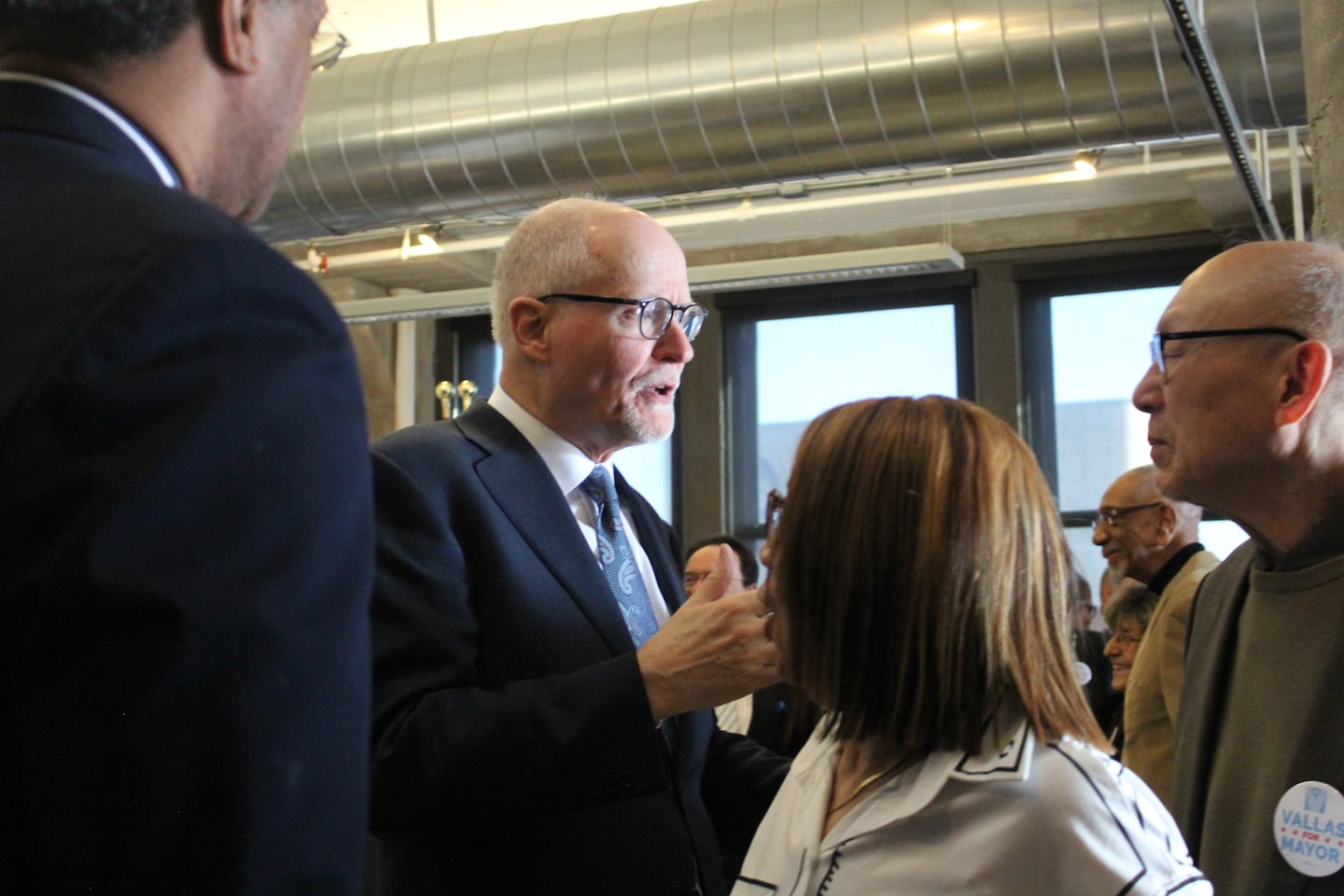
Vallas began to carry out Daley’s big goals: Avert a teachers strike after several in the 80s, fix the district’s budget, and improve student performance. Vallas kickstarted reforms that included placing low-performing schools on academic probation, leading to turnarounds that involved firing of hundreds of educators. The district also held far more students back a grade. Hundreds of school buildings were repaired while dozens of new ones were built. Teacher pay improved.
The drastic changes resulted in only a slight improvement in test scores, one Northwestern study showed, and the mayor was reportedly frustrated over that. Chico stepped down in May 2001 and Vallas resigned a month later after what he described as “six great years.”
“The one thing mayoral control did do was it forced the mayor to get more involved in the schools and play a role because the mayor used to kind of duck responsibility,” Vallas said.
Duncan replaced Vallas in June 2001 and served through 2008, after which he became U.S. secretary of education under President Barack Obama, a fellow Chicagoan. Duncan was and remains the district’s longest running CEO. Duncan recalled “robust debates” with board members, refuting the belief that boards were mayoral rubber stamps.
One time, he said he persuaded the board to shift money when times were tight to a summer bridge program, which gives students support transitioning to a new school or grade, in response to new research on dropout prevention.
“That wasn’t easy,” Duncan said. “They questioned, they challenged, we thought it through and they ultimately supported it.”
In 2011, Rahm Emanuel succeeded Daley as mayor. A Democratic power broker who was a former congressman and adviser to Presidents Bill Clinton and Obama, Emanuel continued a reform-heavy approach to the school district.
His era of mayoral control featured the continued expansion of privately run school programs, the rollout of universal pre-K, the closure of 50 schools in largely Black and Latino neighborhoods, financial crises, a reformed state education funding formula that infused hundreds of millions of dollars in new money into CPS, and a revolving door of CEOs.
Beth Swanson, Emanuel’s deputy for education in the mayor’s office, said the administration consulted community organizations and other constituents before making decisions, contrary to some public belief.
Still, boards voted in line with what their mayor wanted, and breaking with City Hall could have consequences.
Under Mayor Lori Lightfoot, Emanuel’s successor, board member Dwayne Truss was replaced after he opposed a plan for building a new, $120 million high school in Chinatown. Lightfoot’s team said Truss’s term had simply expired, but Truss claimed he’d been asked to stay for another term before his public opposition to that plan.
Johnson took the reins in 2023, fulfilling the teachers union’s longtime goal of installing one of their own in the mayor’s office. But it came at an awkward time. The clock was ticking — halfway through Johnson’s term, the board would become partly appointed and partly elected.
Early on Johnson’s watch, the district moved away from funding schools based on student enrollment, removed school-based police officers, approved paid parental leave for teachers, and rethought selective schools admissions before backing off.
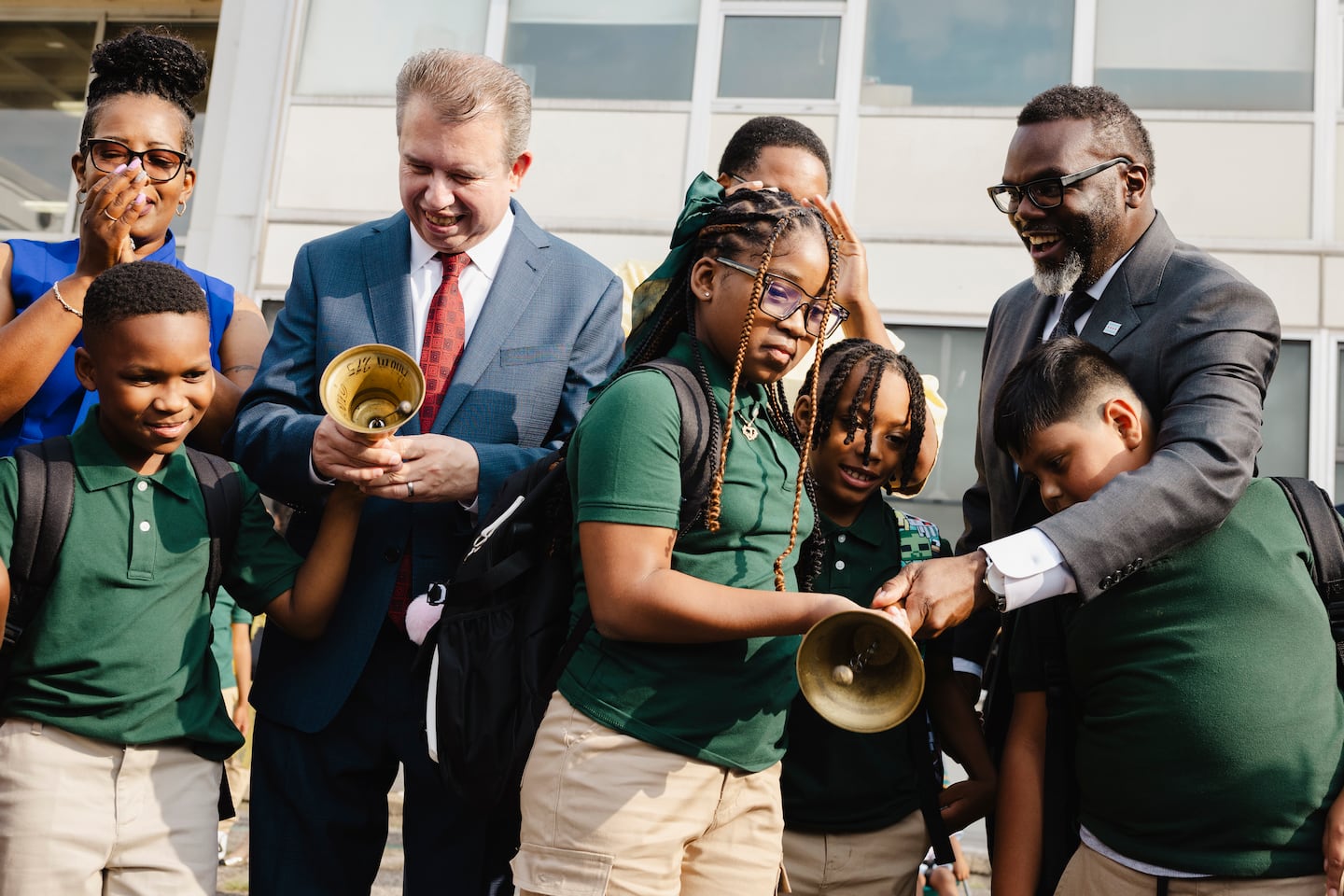
Then a rift opened between Johnson and his all-appointed board over a Johnson ultimatum: agree to take out a high-interest short-term loan to help pay for hefty pension and union contract costs or fire then-CEO Pedro Martinez.
All seven members resigned. Johnson appointed new members, most of whom stayed on a few months later when 10 newly elected members joined. It was the beginning of the end of mayoral control.
Mayoral control by nature meant that the proverbial buck stopped with one person, and they could be voted out.
Supporters argued that the system also aligned City Hall with CPS so that they could more efficiently carry out important work, such as the expansion of universal pre-K under Emanuel.
During COVID under Lightfoot’s tenure, mayoral control made it easier for City Hall, CPS, and other city agencies to get on the same page and communicate — sometimes multiple times a day — on issues such as COVID testing sites and distributing meals to families, said Arnie Rivera, who worked in senior education roles under Lightfoot and Emanuel.
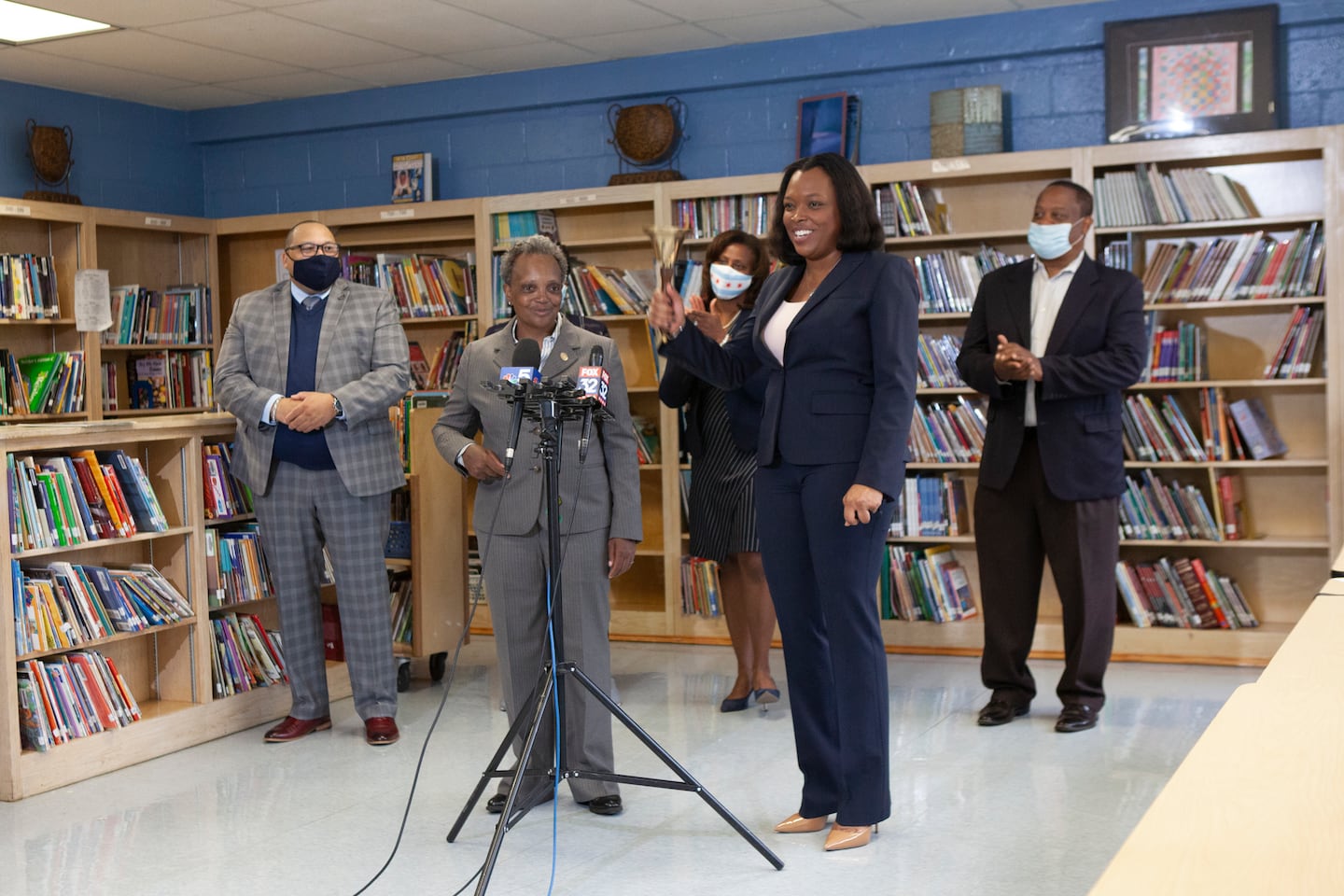
Rivera also pointed to the 2017 creation of the state’s budget formula that increased funding for schools based on student needs as a success story of the mayoral control era.
The fight for more state funding came as the district faced a financial crisis. CPS skipped teacher pension payments under Daley and again for two years under Emanuel. By 2014, the district was draining its cash reserves to fill deficits and make pension payments while using a debt-refinancing method that saddled future generations with higher costs..
The state formula was ultimately revamped after persistent advocacy from the city and CPS leaders, dramatically changing CPS’s financial future, Rivera said.
“That ability to speak as a united voice played a huge role in the state of Illinois saying, ‘OK, yes, the powers that be in the city of Chicago are all saying this is an important priority for them,’” Rivera said.
Public sentiment sours
Many blame the Emanuel administration’s decision to close 50 schools in 2013 in largely Black and Latino neighborhoods for speeding up the death of mayoral control. But advocates and organizers in some of Chicago’s Black communities said the seeds were planted long before.
In the 2000s, Duncan carried out a Daley plan that sought to build 100 new, high-quality schools by 2010. The effort resulted in the closure of many existing neighborhood schools and the opening of largely charter or other privately run, publicly funded programs, even as student enrollment was declining.
A 2011 study found that graduation rates and high school achievement dramatically improved after the Daley era, but that most CPS students were not yet academically prepared for college. Historic inequities seemed to be widening: White students were performing far better than before 1995, while Latino and Black students were not catching up as fast.
Other studies showed “incremental growth” in student achievement that began at the start of Duncan’s tenure and accelerated through 2014, said Paul Zavitovsky, a researcher at the University of Illinois Chicago. In 2017, a Stanford study found CPS students were learning at a faster rate than most of their peers across the U.S.
On paper, it seemed that 30 years after former U.S. Secretary of Education William Bennett labeled Chicago schools as the nation’s worst, the city had changed its trajectory.
But the closures and upheaval of school communities left the public angry and scarred.
On the West Side, Valerie Leonard was leading the Lawndale Alliance, a community organization interested in various issues, including education. She said one of her earlier memories of mayoral control was watching her father, a longtime principal, be forced to retire after his school narrowly missed student achievement requirements established under Vallas.
Then, as Daley’s 2010 plan took hold, she watched the closure of beloved neighborhood programs and the launch of school turnarounds, galvanizing her to push for an elected board.
“We just wanted to hear about school performance, how our kids were doing, and hopefully make recommendations for school improvement,” Leonard said. “And the next thing we know, we had a serious onslaught of charters that were taking over schools.”
Jitu Brown, a longtime community activist on the South Side, began advocating more against closures under Duncan. He said he realized “that these people were not accountable to us, that they answered to the mayor,” and that Black communities were bearing the brunt of the board’s decisions.

Years later, shortly before CPS announced plans to close Dyett High School, Brown recalled attending a community meeting with Emanuel’s appointed board president David Vitale in attendance.
“We walked up to him and said, ‘Enjoy your time, because we’re gonna get this elected school board and you’re not gonna be able to do this in our community anymore,” Brown said.
Brown and several others eventually held a hunger strike seeking to stop Dyett from closing, and they prevailed. He would go on to run unopposed for an elected seat in 2024.
Mayoral control also saw the rise of a caucus within the Chicago Teachers Union that fought against closures and charter expansion. It was led by its late president Karen Lewis, who waged bitter battles with Emanuel, elevating the union nationally and paving the way for strikes.
The Emanuel administration’s move to close 50 schools was followed by board meetings in which parents, students, and teachers begged the board to vote against the plan. Cassie Creswell, a longtime education advocate, teared up while remembering the final meeting when the board voted to close schools the district had deemed underperforming and underutilized. Parents, many of whom were dragged away from the podium, were “helpless,” she recalled.
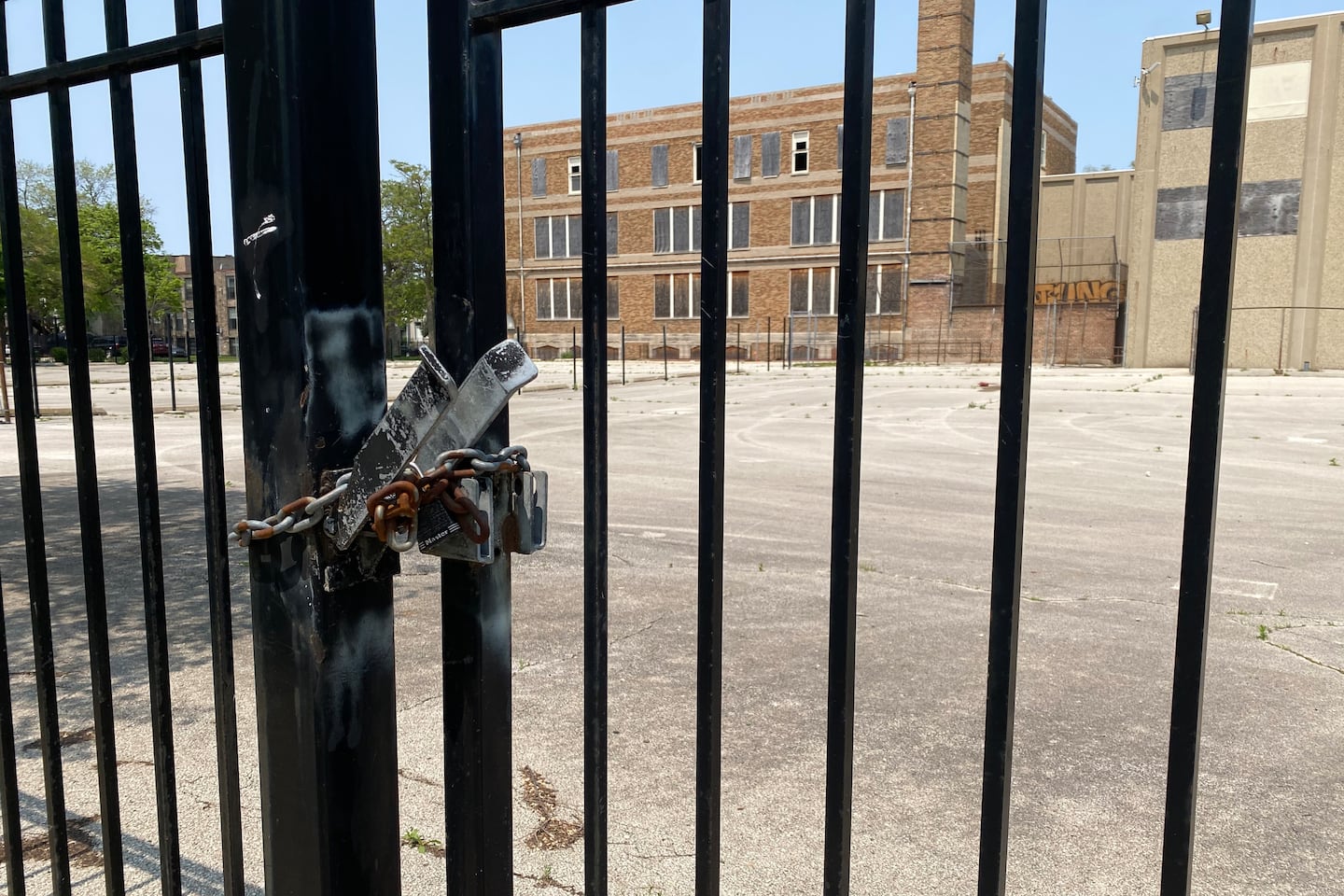
In the end, about one-third of students from the closed schools transferred out of CPS, and a study found academic outcomes for students impacted by the closures were “neutral at best.”
Two years later, in 2015, multiple organizations pushed to get an advisory question on the ballot in 37 of Chicago’s 50 wards asking whether the city should switch to an elected school board. All 37 wards voted yes — many at more than 90%.
In the nearly 17-year period between the Daley and Emanuel administrations, 200 schools were massively overhauled or closed, WBEZ reported.
Mayoral control’s final years
State lawmakers passed a law in 2021 paving the way for an elected school board. But drawing district boundaries took time and political disagreements slowed the process.
Jianan Shi, who as a nonprofit leader helped push for an elected board, was appointed by Johnson to become president of the board that later resigned en masse. The ability to adopt policies he believed in never changed his belief that mayoral control needed to die.
“Before my time on the board, during my time on the board, and now — even however messy these times are — I still believe in distributing power,” Shi said.
The November school board election drew more than 600,000 voters and at least $10 million in spending from special interest groups seeking to sway the outcome. The vote resulted in CTU-backed members losing their majority and buoyed supporters of school choice.
Even post-mayoral control, the district will rely on certain financial benefits from the city. And having a unified front between CPS and City Hall could help achieve goals on the state and federal levels, several people said.
“For this mayor and a future mayor to be successful, they need a thriving education system in a city where people want to raise their children and engage,” said Swanson, the former Emanuel official.
With enrollment continuing to decline, school closures again will be a major topic.
Johnson, who is running for reelection, said this summer that the days of school closures are over. Alexi Giannoulias, who’s also running, has said he would handle the issue differently than Emanuel. Perennial candidate Willie Wilson says he wants to close schools.
But there’s a new reality: It won’t be their decision.
Reema Amin is a reporter covering Chicago Public Schools. Contact Reema at ramin@chalkbeat.org.